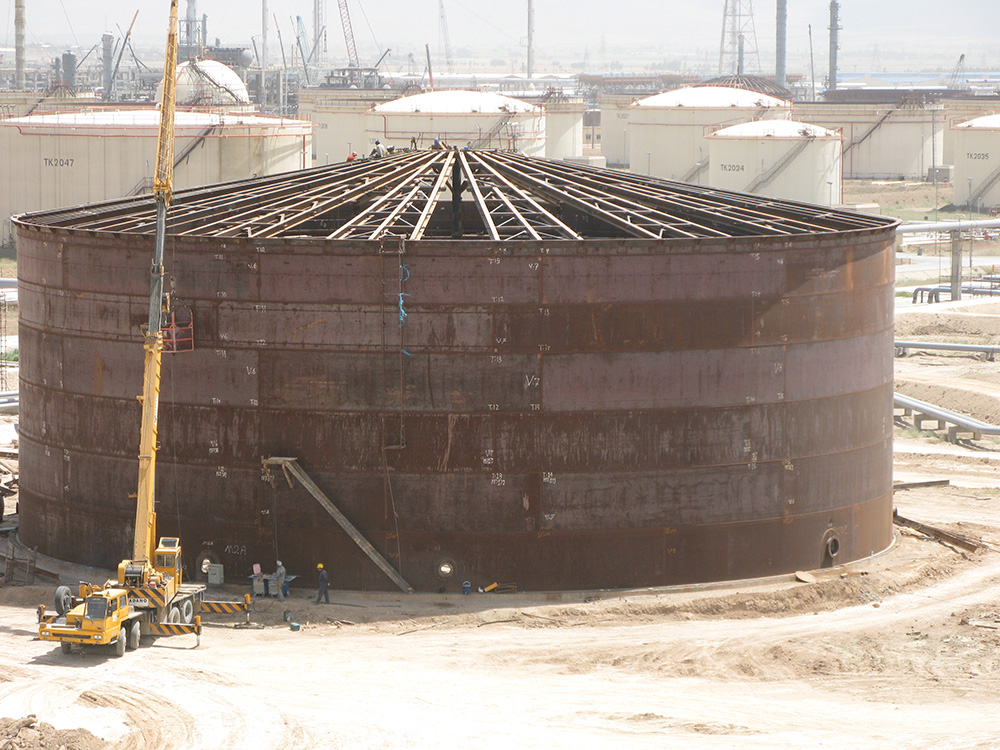

An atmospheric cylindrical tank is a critical component in various industries such as oil, gas, chemical, and petrochemical industries. These tanks are used to store liquids and chemicals at atmospheric pressure. In this article, we explore the concept, applications, and complete installation guide for atmospheric cylindrical tanks.
What is an Atmospheric Cylindrical Tank?
An atmospheric cylindrical tank is a type of tank designed for storing liquids at atmospheric pressure. Due to their simple design and cost-effectiveness, these tanks are widely used across different industries.
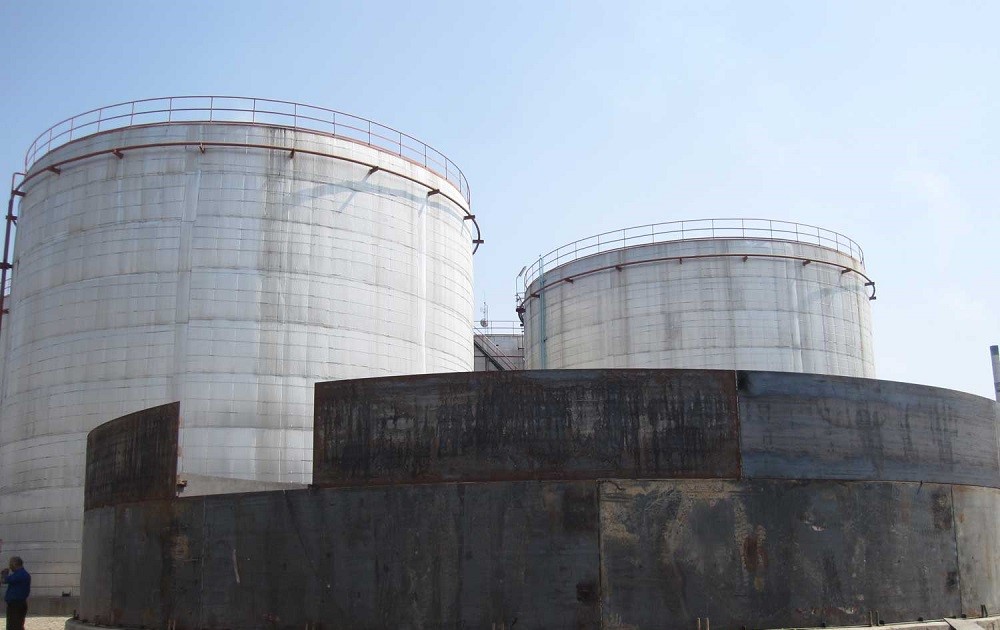
Also read: Design and construction of a cylindrical tank under pressure
Applications of Atmospheric Cylindrical Tanks
Due to their simple structure, cost-effectiveness, and suitability for atmospheric pressure, atmospheric cylindrical tanks have diverse applications in various industries. Below are some of their common applications:
Oil and Gas Industries
- Crude Oil Storage: Used for storing crude oil before the refining process.
- Petroleum Products Storage: These tanks store petroleum products such as gasoline, diesel, kerosene, and other refinery products.
- Natural Gas Liquids Storage: Suitable for storing natural gas liquids obtained from gas separation processes.
Chemical Industries
- Chemical Storage: Used for storing various chemicals including acids, bases, solvents, and corrosive chemicals.
- Raw Material Storage: These tanks store raw materials and intermediates before the process stages in chemical production.
Food and Beverage Industries
- Raw Food Material Storage: Used for storing raw food materials such as edible oils, syrups, and other food raw materials.
- Finished Product Storage: These tanks store finished products like fruit juices, soft drinks, and other beverages before packaging and distribution.
Water and Wastewater Industries
- Potable Water Storage: Used in water treatment plants and municipal water distribution systems.
- Industrial Water Storage: These tanks store industrial water used in manufacturing and industrial processes.
- Wastewater Storage: Used for collecting and holding industrial and municipal wastewater before appropriate treatment and disposal.
Pharmaceutical and Hygiene Industries
- Raw Pharmaceutical Material Storage: Used for storing raw pharmaceutical and chemical materials in drug manufacturing processes.
- Sanitary Solutions Storage: These tanks store sanitizing solutions and disinfectants used in hygiene applications.
Agricultural Industries
- Fertilizer and Pesticide Storage: Used for storing liquid fertilizers and agricultural pesticides.
- Irrigation Water Storage: These tanks store water used for irrigation in farms and orchards.
Atmospheric cylindrical tanks play a crucial role in improving efficiency and safety in industrial processes due to their versatility and numerous advantages. From storing crude oil and petroleum products to chemicals and food products, these tanks are vital components across various industries.
Also read: Application of cylindrical tank in petrochemical industry
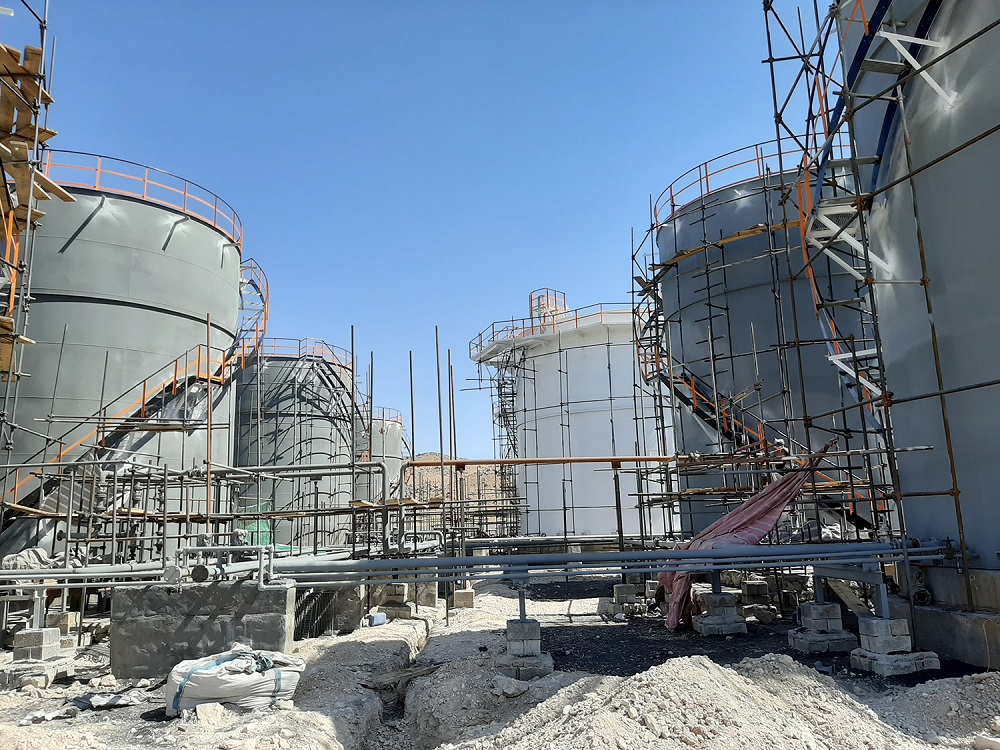
Comprehensive Guide to Installing Cylindrical Atmospheric Tanks
Selecting the Appropriate Location
- The installation site should be chosen so that the tank is easily accessible and has enough space for maintenance and periodic inspections.
- It is mandatory to adhere to local laws and regulations regarding safety and environmental distances.
Foundation and Base Preparation
- The foundation and base must be designed and constructed to support the weight of the tank when it is full of liquid.
- Using corrosion-resistant materials and appropriate design to prevent settlement and deformation of the tank is mandatory.
Tank Installation
- The tank should be carefully placed on the foundation using appropriate equipment.
- A thorough check should be conducted to ensure the tank is level and to prevent any tilting or instability.
Connecting Pipes and Auxiliary Equipment
- Inlet and outlet pipes, valves, and measuring equipment must be installed carefully.
- Using corrosion-resistant gaskets and fittings to prevent leaks and damage is mandatory.
Testing and Inspection
- After installation, the tank must undergo pressure testing and periodic inspections to ensure its integrity and functionality.
- All valves and connections should be checked for leaks.
Important Maintenance Tips for Cylindrical Atmospheric Tanks
- Periodic Inspections: Tanks should be regularly and periodically inspected for corrosion, leaks, and other issues.
- Cleaning: Regular internal and external cleaning of the tank is essential to prevent the accumulation of deposits and corrosive materials.
- Adherence to Standards: The installation and maintenance of tanks should comply with international standards such as API 650 and API 653.
Cylindrical atmospheric tanks, due to their simple design, reasonable costs, and wide applications, are key components in various industries. Proper installation and regular maintenance of cylindrical atmospheric tanks can enhance efficiency and safety in industrial operations. By following the mentioned guidelines and steps, the health and performance of cylindrical tanks can be ensured.
sources:
- API Standard 650 – Welded Tanks for Oil Storage. (2013). American Petroleum Institute.
- API Standard 653 – Tank Inspection, Repair, Alteration, and Reconstruction. (2014). American Petroleum Institute.
- Smith, J. M., Van Ness, H. C., & Abbott, M. M. (2005). Introduction to Chemical Engineering Thermodynamics. McGraw-Hill Education.