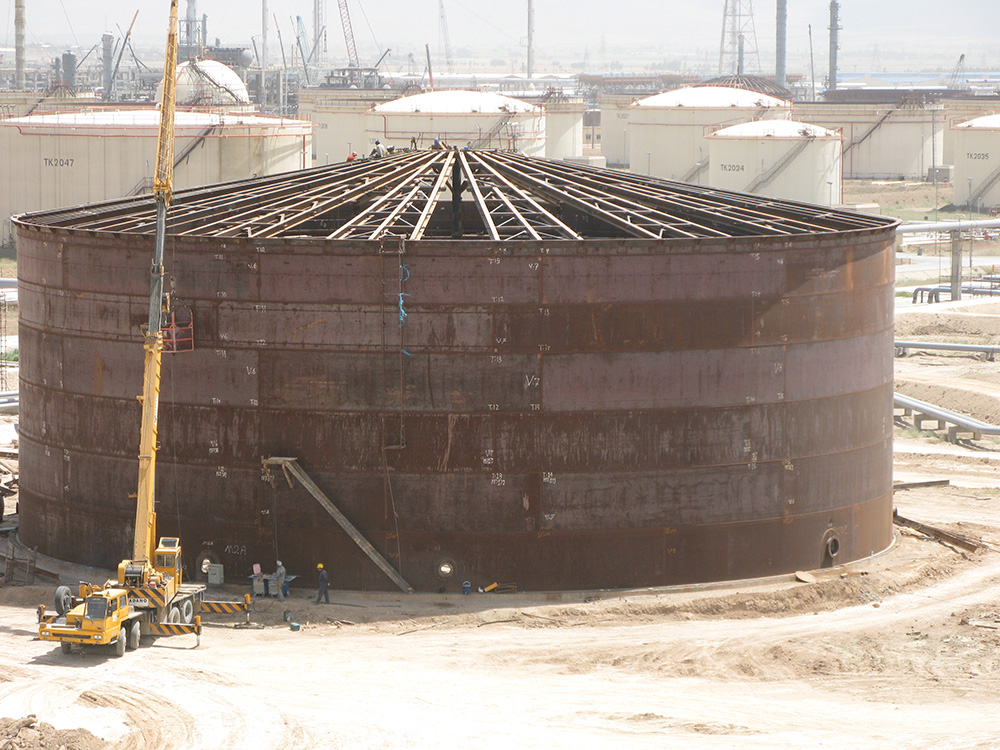

In many industries—including oil, gas, petrochemical, energy, food, and pharmaceuticals—the safe and efficient storage of fluids under various pressure and temperature conditions is of critical importance. This necessity makes the specialized design of storage tanks and pressure vessels a fundamental part of engineering. To ensure the proper performance of these systems, a combination of international standards, safety criteria, accurate material selection, and advanced engineering calculations must be applied.
This article offers a comprehensive review of the principles of designing pressure storage vessels and tanks, aiming to analyze all key aspects of the process from a professional and practical standpoint.
Differences between storage tanks and pressure vessels
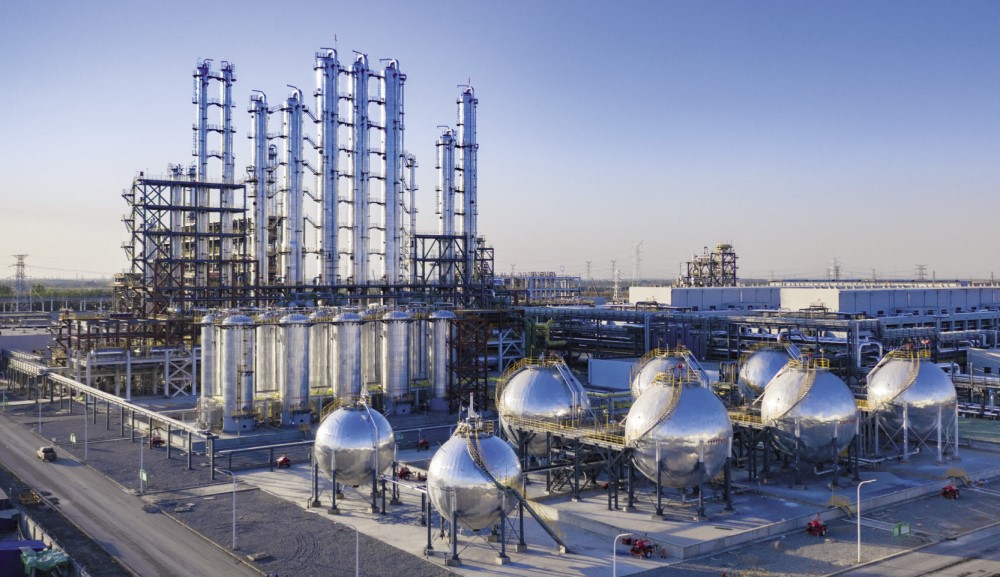
Although sometimes used interchangeably, storage tanks and pressure vessels have essential differences. Storage tanks are generally designed to hold fluids at or slightly above atmospheric pressure, whereas pressure vessels are constructed to withstand much higher internal or external pressures (above 15 psi). These distinctions directly affect their design, material selection, and applications.
Storage tanks are primarily used in refineries, oil terminals, and chemical plants for storing materials like crude oil, gasoline, or water. These tanks usually have large volumes and can be either open-top or closed. In contrast, pressure vessels are used in more complex processes such as chemical reactors, autoclaves, or compressed gas storage like CNG tanks. They must withstand high stress and often require compliance with stringent standards like ASME Section VIII—mandatory for pressure vessels but not always for atmospheric storage tanks.
Design standards for storage tanks and pressure vessels
Standards play a vital role in ensuring the safety, performance, and efficiency of storage tanks and pressure vessels. ASME Section VIII is one of the most recognized global references for pressure vessel design, presented in three divisions (Division 1, 2, and 3) for moderate, advanced, and high-pressure applications respectively.
For storage tanks, API 650 is commonly used, especially for atmospheric oil storage tanks, focusing on wall thickness, roof type (fixed or floating), and foundation design. European standards like BS EN 13445 and ISO 11439 are applied to specific designs such as compressed gas tanks. Complying with these standards is not only essential for safety but also legally required; failure to meet them can lead to serious incidents such as leakage, explosions, or complete tank failure. Thus, engineers must stay updated on the latest versions of these standards.
Material selection for tank and vessel construction
Choosing the right materials is one of the most critical steps in designing storage tanks and pressure vessels. Selected materials must withstand operational pressures, extreme temperatures, corrosion, and mechanical stresses. Carbon steel is the most commonly used material due to its strength and affordability. However, in corrosive environments, stainless steel or specialty alloys like aluminum and nickel are preferred.
Internal coatings such as epoxy or polyethylene are often applied to enhance corrosion resistance. For pressure vessels, material selection must comply with recognized standards like ASTM, which clearly define mechanical and chemical properties. Factors like cost, availability, and weldability must also be considered to balance safety, performance, and economics.
Types of tanks by shape and structure
Storage tanks and pressure vessels come in various geometric shapes, each suited for specific applications. The most common forms include cylindrical, spherical, and conical tanks. Cylindrical tanks are widely used in the oil and gas industries due to their lower construction cost and ease of fabrication.

Spherical tanks, while more complex and expensive to manufacture, are ideal for storing compressed gases like LNG and LPG. Their geometry provides uniform stress distribution, improving pressure resistance and reducing stress concentration.
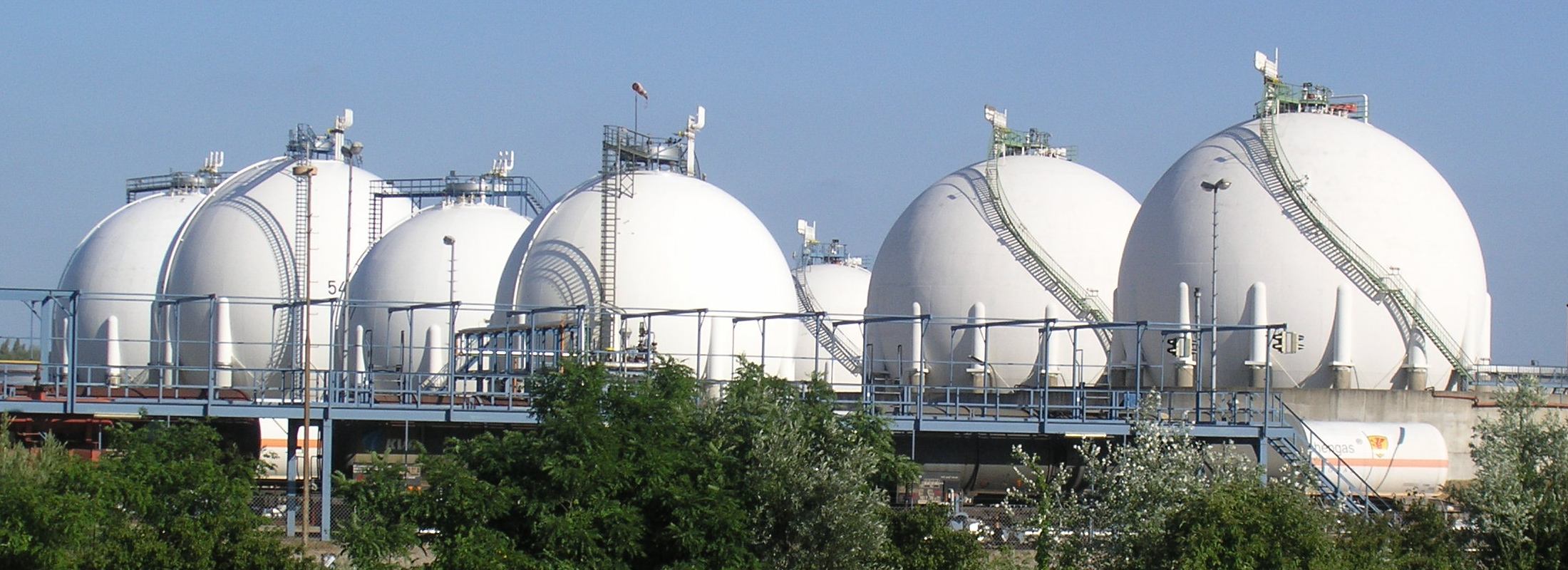
Conical tanks are typically used in processing systems like distillation towers. The choice of shape depends on factors like fluid type, operating pressure, environmental conditions, available space, and budget. The selection of tank heads—whether hemispherical, elliptical, or flat—also significantly impacts the vessel’s overall pressure resistance.
Design calculations and stress analysis
Design calculations are among the most complex aspects of creating storage tanks and pressure vessels. These include determining wall thickness, stress analysis, evaluating structural stability under internal and external pressures, and assessing performance under dynamic loads like wind or earthquakes. For pressure vessels, maximum allowable stress theory, as defined in ASME Section VIII, is commonly applied.
In storage tank design, API 650 outlines precise criteria for wall thickness, and resistance to static and environmental loads. Software tools like PVElite and ANSYS enable precise and faster analysis. All possible load conditions—thermal changes, temporary loads—must be evaluated to ensure long-term operational safety. For instance, in spherical tanks, careful control of bending and shear stresses is critical to avoid cracking.
Fabrication and welding methods
The fabrication of pressure storage vessels and tanks requires advanced welding techniques and strict adherence to international standards. Welding is the most crucial process in construction, as weld quality directly affects the durability and safety of the tank. Common welding methods include SMAW (Shielded Metal Arc Welding) and TIG (Tungsten Inert Gas Welding).
ASME Section IX precisely defines qualifications for welders, welding procedures, and weld quality control. In high-precision spherical tanks, special techniques like explosive welding may be used. After fabrication, non-destructive testing (NDT) methods such as radiography and ultrasonic testing are mandatory to verify weld integrity. While atmospheric storage tanks involve less complexity, compliance with API 650 welding guidelines is still necessary.
Testing and inspection of tanks
Testing and inspection are crucial phases in tank and vessel design and fabrication. The most common test is the hydrostatic test, where the tank is filled with water and subjected to pressure above its design pressure to examine the strength of walls and welds. This test helps detect leaks, weak welds, and other potential defects.
Other NDT methods—like radiographic, ultrasonic, and magnetic particle testing—are used to identify cracks, porosity, or internal discontinuities in welds and base metal. For storage tanks, visual inspections and wall thickness checks are essential during operation, as corrosion and wear can weaken the structure over time.
API 653 provides detailed guidelines for inspection, repair, and reconstruction of atmospheric storage tanks in service, covering corrosion evaluation, mechanical testing, and foundation stability. Regular periodic inspections using advanced tools like drones and smart sensors can significantly enhance tank safety and prevent catastrophic failures.
Safety and risk management in tank design
Safety is paramount in the design of storage tanks and pressure vessels. Even a minor design or fabrication flaw can lead to major incidents like explosions, fires, or environmental pollution. A key preventive measure is installing pressure relief systems, including safety valves and rupture discs, which protect the vessel from over-pressurization.
For storage tanks, risk management includes proper ventilation systems, earthquake-resistant foundations, and leak or fire hazard assessments. API 2000 provides guidance for venting systems and explosion risk mitigation in storage tanks.
Effective risk management also involves personnel training, emergency planning, critical scenario simulations, and advanced monitoring systems. A holistic approach to safety and risk control helps ensure the protection of personnel, equipment, and the environment.
The role of modern technologies in tank design
Modern technologies have revolutionized the design and fabrication of storage tanks and pressure vessels. Specialized software like PVElite, AutoCAD Plant 3D, and COMPRESS allow for 3D design, stress analysis, precise calculations, and performance simulations. These tools reduce human error and accelerate the design process.
Additionally, artificial intelligence (AI) and machine learning are increasingly used to analyze inspection data and predict potential failures. Smart algorithms can identify corrosion trends and weak points, enabling predictive maintenance.
Advanced materials like nanomaterials and corrosion-resistant composites are also being adopted, resulting in lighter and longer-lasting tanks. IoT-based sensors allow real-time monitoring of pressure, temperature, corrosion, and leaks—enhancing safety while reducing maintenance costs.
Challenges and solutions in tank design
Designing storage tanks and pressure vessels comes with numerous challenges. One major challenge is balancing safety requirements with cost-efficiency. Improving material quality and design accuracy increases safety but also raises project costs. The solution lies in smart use of simulation tools and cost-safety optimization.
Other challenges include designing for harsh environments such as seismic zones, extremely cold climates, or highly corrosive settings. These require higher safety margins and more resilient materials. Constant changes in international standards and emerging regulations also complicate the design process. Staying up-to-date and continually upgrading technical knowledge is key.
Other effective strategies include adopting digital technologies, continuous staff training, collaborating with reputable engineering firms, and following best engineering practices. With its extensive experience, Petrosazeh International Aram can play a key role in overcoming these challenges.
The future of storage tank and pressure vessel design
The future of tank and vessel design is moving toward smart technologies, environmental sustainability, and efficiency enhancement. With the global shift toward renewable energy and green fuels, the design of tanks for storing hydrogen and other clean gases is gaining importance. These tanks must withstand extremely high pressures and very low temperatures, requiring new materials and construction techniques.
Digital Twin technology is also transforming tank management and maintenance by creating a virtual replica of the tank, enabling behavior prediction, risk analysis, and operational optimization throughout its life cycle.
There’s also a growing focus on using recyclable materials and low-carbon manufacturing processes. With investments in green R&D, Petrosazeh is at the forefront of this transformation in tank design and fabrication.
Conclusion
The design of storage tanks and pressure vessels is a complex and sensitive process that demands advanced engineering knowledge, strict standard compliance, and a strong focus on safety and risk management. From material selection to precise calculations, fabrication, and inspection—each step is vital to ensuring safe and efficient operation.
By embracing modern technologies, optimizing designs, and adhering to global standards, industries can build safer, more economical, and sustainable tanks. Given their importance across multiple sectors, working with experienced and reputable companies like Petrosazeh International Aram ensures success in industrial projects. This article aimed to serve as a practical and reliable reference for engineers, professionals, and enthusiasts in the field.
References:
- ASME Boiler and Pressure Vessel Code, Section VIII: Rules for Construction of Pressure Vessels
- API Standard 650: Welded Tanks for Oil Storage
- ASTM International Standards for Materials
- Pressure Vessel Design Manual by Dennis R. Moss
- CASTI Guidebook to ASME Section VIII
- https://www.engineeringtoolbox.com/pressure-vessels-design-c_1048.html
- https://www.twi-global.com/technical-knowledge/faqs/what-is-a-pressure-vessel
- https://www.petroleumtraining.org/courses/pressure-vessel-design