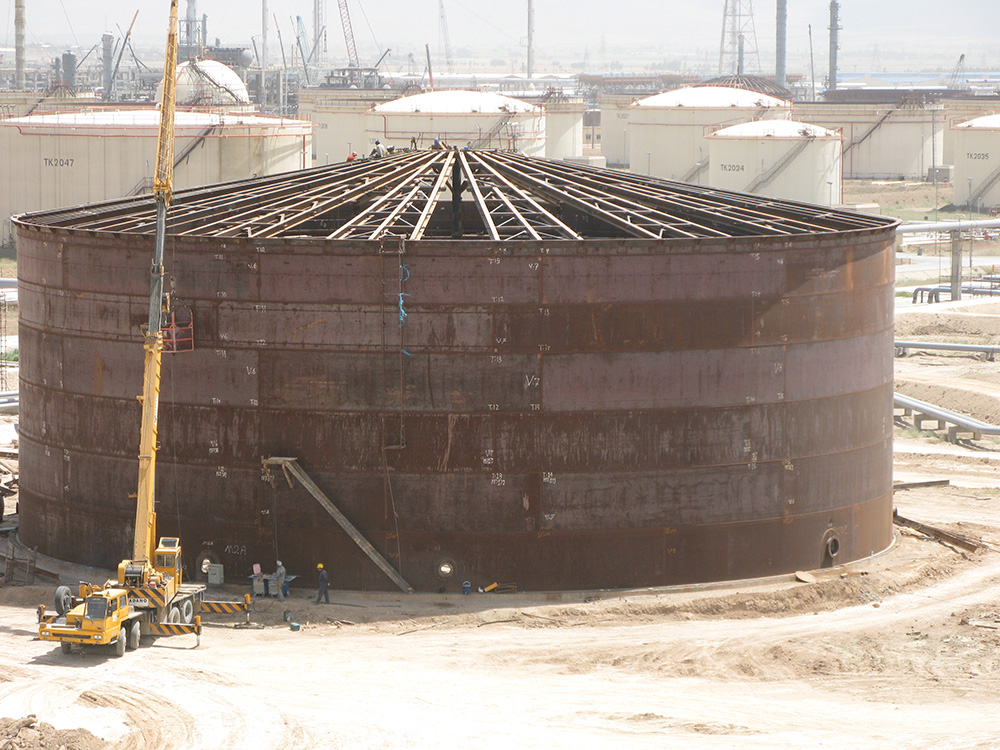

Working with storage tanks and pressure vessels—especially those containing petroleum fuels or other flammable materials—requires strict adherence to safety principles. Flammable vapors released from these tanks, when mixed with atmospheric oxygen, are highly prone to explosion and fire. The presence of even a small ignition source can trigger a serious incident.
The primary objective in firefighting for oil storage tanks is to prevent the simultaneous presence of the three elements required for combustion: fuel, air, and an ignition source. This seemingly simple principle is of critical importance in preventing fires and explosions. In addition, strict safety practices during the operation and maintenance of storage tanks and pressure vessels can significantly reduce the risk of human injury and financial loss.
Importance of Floating Roof Tanks
From a safety perspective, floating roof tanks have clear advantages over fixed roof tanks. In these tanks, the likelihood of fire is reduced, and if a fire does occur, it is easier to control and extinguish. Rapid response during the initial minutes of a fire is crucial, as delays may result in ignition of the entire tank contents. For this reason, floating roof tanks are equipped with a variety of modern firefighting systems to enable fast and effective emergency response.
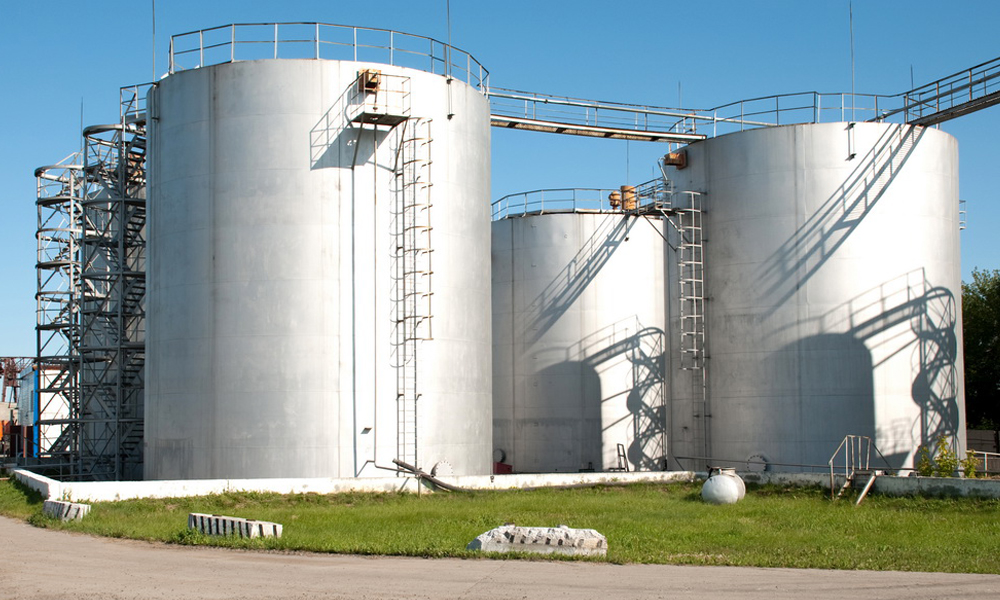
Firefighting Equipment and Methods in Oil Tanks
A variety of methods and equipment are used to combat fires in oil storage tanks, each playing a complementary role in fire control and suppression. These systems are designed to rapidly cool the liquid surface and tank walls, suppress flames, and prevent fire spread. The most important methods and equipment are described below.
Firefighting Foam
One of the most widely used methods for firefighting in storage tanks and pressure vessels is the use of firefighting foam. This method is implemented in two main ways: foam injection from the top of the tank and foam injection from the bottom of the tank.
Top Injection Foam System
Firefighting foam is prepared in a unit known as the foam package, located outside the tank, and is then delivered through piping installed around the upper circumference of the tank shell. Inside each pipe outlet, a plastic foam chamber is installed. When foam enters under pressure, the chamber breaks, allowing the foam to spread over the liquid surface. This creates a protective layer that separates the fuel from the air, thereby rapidly suppressing the fire.
The main advantage of this method is the rapid and uniform coverage of the liquid surface, which quickly reduces flame propagation. This system is particularly suitable for large oil storage tanks.
Bottom Injection Foam System
Another method involves injecting foam from the bottom of the tank. Since the density of foam is lower than that of oil, it rises to the surface and spreads across the liquid. In addition to forming a protective layer, this movement creates surface agitation, reducing the evaporation of flammable vapors and helping to extinguish the fire.
This system is easier to install and has lower implementation costs compared to top injection systems, and it is more commonly used in modern firefighting installations.
Dry Chemical Powder
Dry chemical powder is another effective method for fighting fires in oil storage tanks. These powders are typically composed of sodium or potassium bicarbonate and are transported to the fire site using mobile firefighting units. The powder is then discharged at high pressure through flexible hoses onto the tank surface and flames.
This method is also effective for controlling fires involving flammable gases and is often used as a complementary measure alongside foam systems to enhance overall fire safety in industrial environments.
Firefighting Ring Main Systems
Firefighting ring mains consist of a network of water pipes installed around the circumference of the tank. When the tank temperature rises excessively or when a fire occurs in an adjacent tank, water flows through these pipes to cool the tank walls and roof.
In some tanks, more than five rows of ring mains are installed, and in certain designs, branches are extended to the tank roof to cool the roof surface as well. These systems may operate manually or automatically and significantly reduce the risk of fire escalation.
Fire Monitors
Fire monitors are devices capable of delivering high-flow, high-pressure water streams onto tanks and their surfaces to control temperature and suppress fire exposure. These units may be manually or automatically operated.
Typically, four fire monitors are installed around each tank, with their locations determined by the tank dimensions. In emergency situations—such as a fire in the tank itself or in nearby tanks—fire monitors play a vital role in preventing fire spread and protecting surrounding equipment.
Practical Safety Guidelines for Personnel
Personal safety is critical when responding to fires in storage tanks and pressure vessels. Personnel must use appropriate personal protective equipment (PPE), including gloves, helmets, and respiratory protection. Prior to any firefighting operation, all firefighting equipment should be inspected, the functionality of monitors and ring mains confirmed, and coordination with response teams ensured.
Additionally, eliminating ignition sources, restricting access for unauthorized personnel, and preparing for emergency evacuation are key safety principles during firefighting operations.

Conclusion
Ensuring safety in pressure storage tanks—especially during fire incidents—is only possible through strict compliance with procedures and the use of modern firefighting equipment. Foam systems, dry chemical powders, ring mains, and fire monitors complement one another and together ensure operational safety.
Continuous attention to personal safety, readiness for rapid emergency response, and proper maintenance of firefighting systems can prevent human and financial disasters and provide a safe environment for personnel and industrial operations.