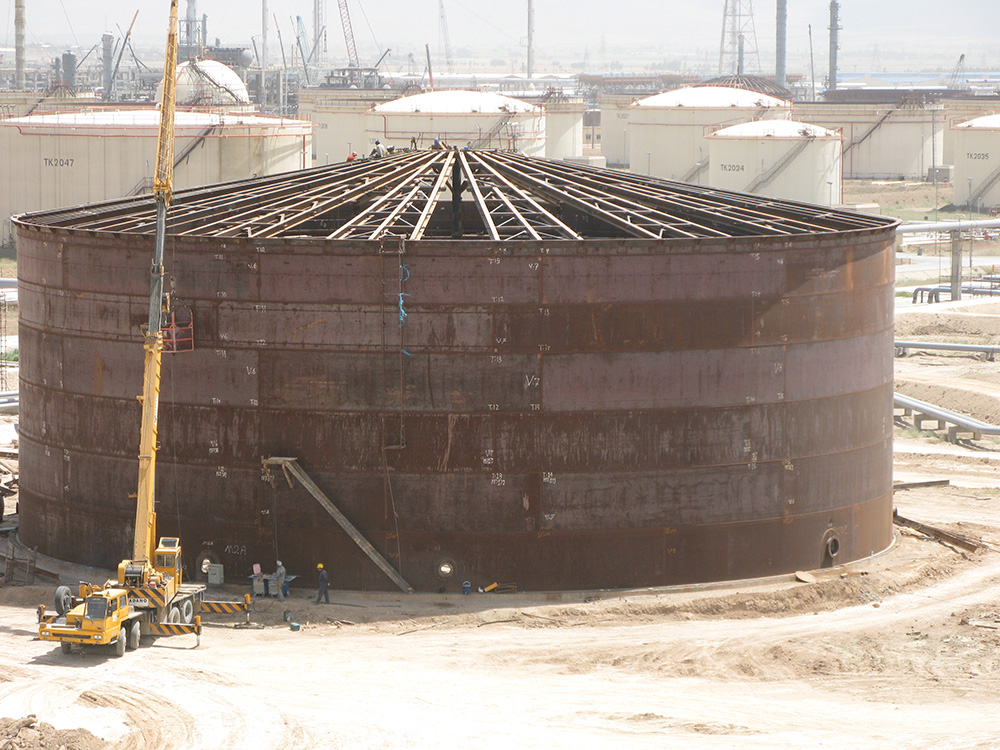
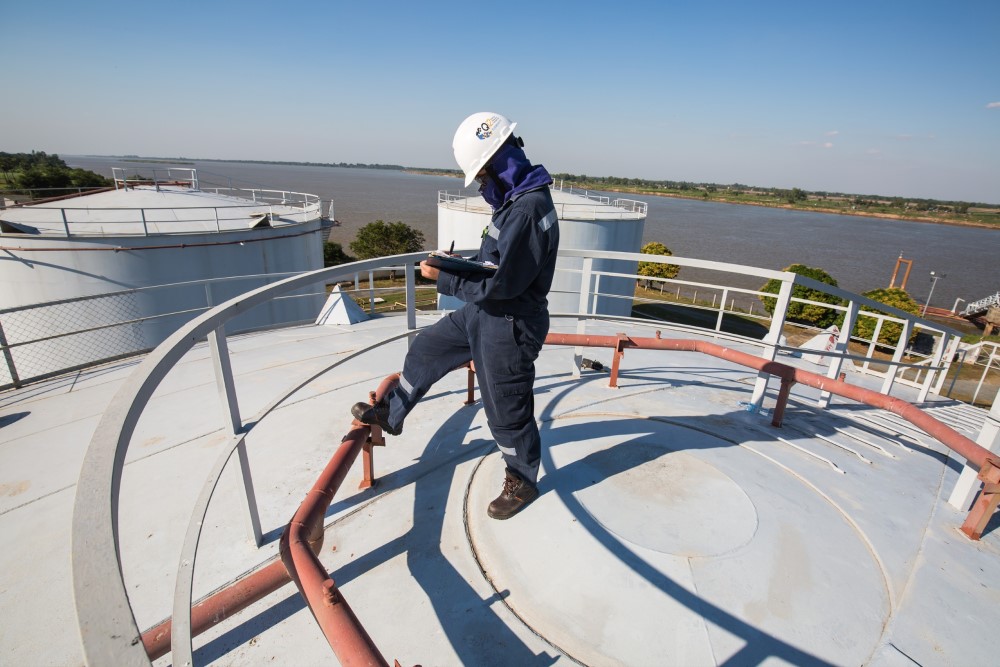
Working with storage tanks, especially those containing gases or flammable materials, requires strict adherence to personal safety principles. Neglecting safety precautions can lead to dangerous incidents, including explosions, suffocation, or serious injuries. Therefore, any entry into a tank, maintenance, sampling, or hot work must be carried out with extreme caution and in accordance with established safety guidelines.
Petrosazeh Beinolmelal Aram (IPS), with extensive experience in designing and operating storage and pressure tanks, emphasizes the importance of personal safety. Inspecting the tank conditions before entry, maintaining continuous communication with a safety observer, and following safety procedures are essential requirements to ensure the health of personnel and safe operations in industrial environments.
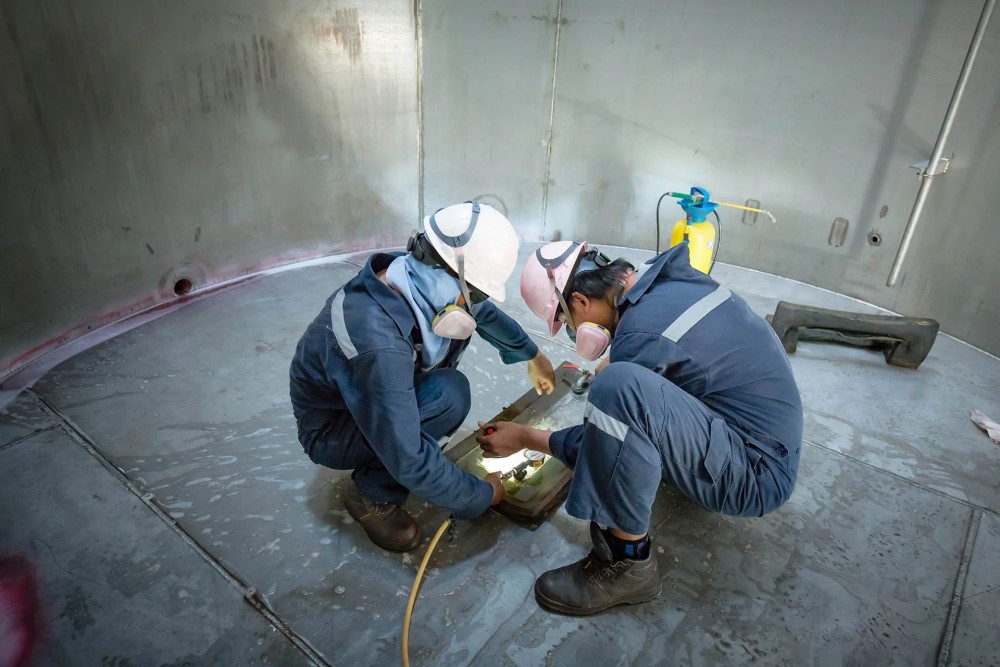
Critical Safety Measures for Working with Storage Tanks
Adhering to personal safety principles is essential when working with storage tanks. The most important guidelines to follow before and during tank entry include:
1. No repairs or work are permitted inside a tank containing gas.
2. Always assume a tank contains explosive gas unless officially verified as gas-free.
3. Before entering a tank, open the roof hatch and discharge outlet to empty the tank contents.
4. Safety equipment, alarms, and communication devices must be checked for proper function before entry.
5. Only approved battery-operated handheld lamps should be used in gas-containing tanks. Electric lamps can be used after the tank has been cleaned and verified gas-free.
6. Entry is only permitted when a safety observer is stationed at the roof hatch.
7. Check the entry hatch size to ensure it is appropriate for safe access.
8. Entry is only allowed using standard ladders and safe, barricaded paths.
9. Anyone entering a gas-containing tank must use a safety rope appropriate for the tank height and weight, securely attached to a safety harness.
10. Wearing a safety mask is mandatory. Before use, ensure the mask fits tightly and is leak-proof. Masks must be cleaned daily, and shared masks must be verified clean.
11. If entry without a mask is necessary, oxygen testing is required. Entry is only allowed once the tank is officially confirmed as gas-free.
12. If any gas is detected, the person must immediately exit the tank.
13. An alarm device must be accessible, and multiple personnel should be on standby to assist.
14. In the event of an accident, the safety observer should first call for help and not enter the tank until assistance arrives. Entry after arrival of help is only permitted with a mask and safety harness.
15. To prevent static electricity sparks, workers must wear gloves when climbing the tank and ensure it is properly grounded.
16. A hot work permit must be obtained prior to welding or any hot work.
17. Entry without a mask or hot work permit is only allowed after gas testing confirms the tank is gas-free.
18. Gas testing should first be conducted from the tank’s top hatch without personnel entry. Once verified, a full internal test can be performed using respiratory protection and necessary precautions.
19. If personnel detect pockets of residual gas inside the tank, all work must stop immediately, and everyone must exit. Entry without a mask is prohibited until the tank is fully cleared.
20. Sampling must never be done via the drain. Samples should only be collected through dedicated sampling points or via the pump discharge. Drain lines are designed for sediment removal and may be blocked. In some cases, manual clearing of drains has led to uncontrolled ejection of chemicals, causing serious injury.
Additional Recommendations
- All personnel must be trained for work with storage and pressure tanks before entry.
- Auxiliary equipment such as ladders, hatches, and filters must be checked and ready.
- All tank entry, testing, and sampling operations should be recorded in the tank operations log.
- Continuous communication between personnel inside the tank and the external support team must be maintained.
- Emergency drills and rapid evacuation training are recommended to increase staff preparedness.

Conclusion
Adhering to personal safety principles when working with pressure vessels is the only way to prevent serious accidents. Any negligence can result in explosions, suffocation, or irreparable injury. Proper use of protective equipment and strict compliance with safety procedures ensures personnel safety and secure industrial operations.