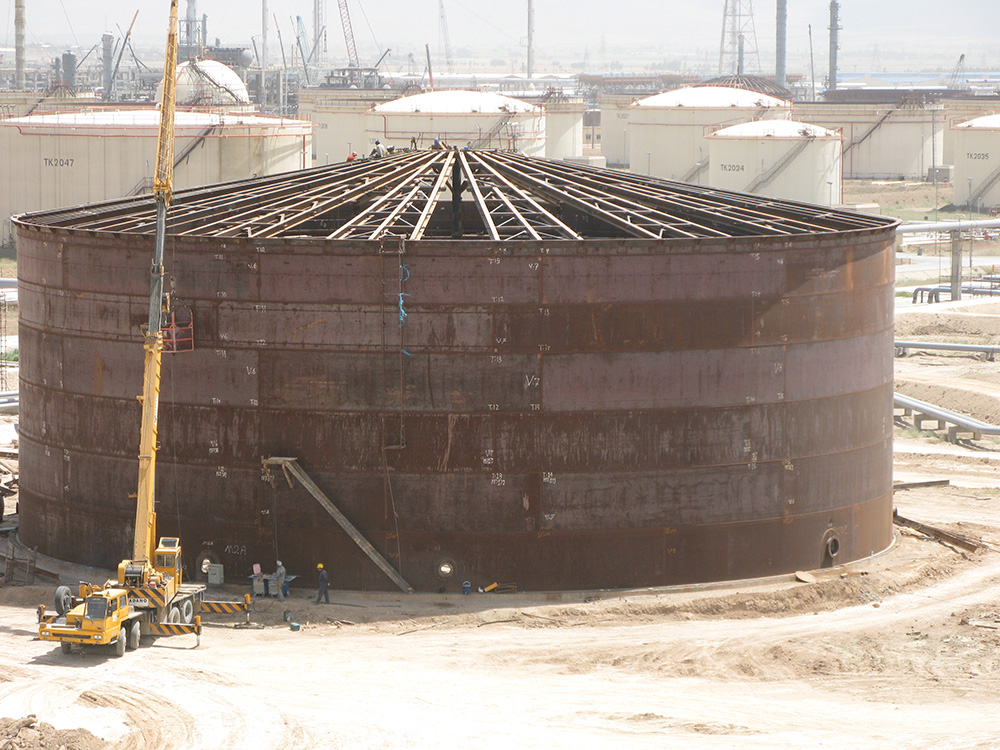

Pressurized spherical tanks are among the most important types of pressure vessels in the oil, gas, petrochemical, and chemical industries. Due to their ability to withstand high internal pressures, spherical tanks require strict quality control at all stages of design, fabrication, and operation. Petrosazeh Beinolmelal Aram (IPS) employs international standards and modern equipment to manufacture spherical tanks with the highest level of quality and safety, ensuring that each tank can withstand operational pressures and achieve maximum service life.
Evaluating the manufacturing quality of these tanks not only guarantees operational safety but also ensures long-term performance and prevents leakage or sudden failure. This article explains the stages and methods for assessing the manufacturing quality of pressurized spherical tanks, the applicable standards, the importance of inspections, and safety considerations.
Importance of Manufacturing Quality in Pressurized Spherical Tanks
Pressurized spherical tanks are designed to store liquids and gases under conditions where the internal pressure is significantly higher than atmospheric pressure. Due to their unique geometry, they distribute internal pressure evenly and must maintain high structural and operational durability, as failure can result in severe human and financial consequences. Therefore, from design to fabrication and final testing, quality assessment is performed meticulously according to international standards, enabling engineers to detect any structural weaknesses, cracks, or potential corrosion before the tank enters service.
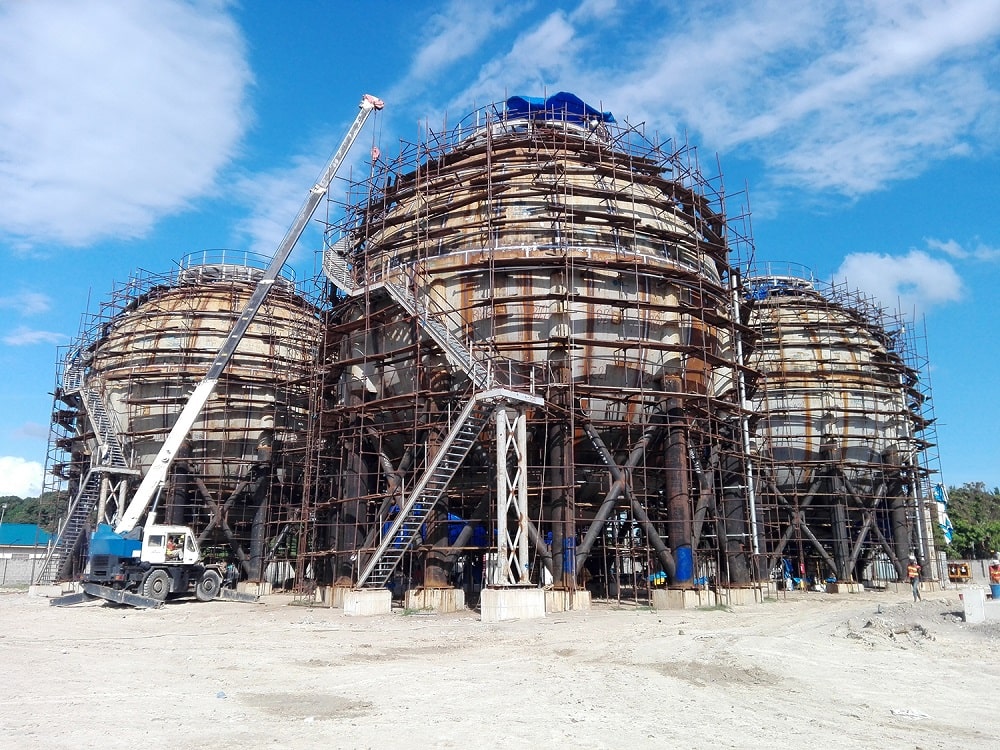
International Standards Used
To assess the construction quality of pressurized spherical tanks, several standards have been defined, the most important of which are:
ASME Boiler and Pressure Vessel Code (BPVC) – Section VIII
This standard is one of the most authoritative guides for the design, fabrication, inspection, and testing of pressure vessels. It outlines requirements for raw materials, welding procedures, non-destructive testing (NDT), and comprehensive inspection methods, applicable to spherical tanks as well.
Other International Standards
In addition to ASME BPVC, standards such as the European Pressure Equipment Directive (PED) and the UK’s PD 5500 also define specific criteria for the design and inspection of pressure vessels.
Stages of Quality Assessment for Pressurized Spherical Tanks
1. Raw Material Inspection
Before welding, steel plates or alloys used for tank fabrication must be inspected for mechanical properties, chemical composition, and compliance with industrial standards. This ensures that the materials can withstand design pressures and maintain their properties over time.
2. Welding and Fabrication Inspection
Welds are critical points in any spherical tank. Their quality directly affects tank performance, as defective welds can initiate cracks or failures.
Welding inspection includes visual examination and NDT methods such as ultrasonic testing (UT), radiographic testing (RT), and penetrant testing (PT) to identify and correct any cracks, porosity, or discontinuities.
3. Wall Thickness Measurement and Dimensional Control
Wall thickness must comply with engineering calculations and design pressures. UT and other NDT methods can measure actual thickness at multiple points to ensure the tank can withstand internal pressures.
4. Hydrostatic and Pressure Testing
One of the most critical steps is hydrostatic and leakage testing. The tank is filled with water and pressurized above the design pressure (typically 1.3–1.5 times the design pressure). Any leakage or visible deformation is then checked, helping to identify structural weaknesses before commissioning.
5. Final Inspection and Quality Certification
The interior of the tank is inspected for welding debris, foreign materials, or potential corrosion, particularly for tanks used in sensitive applications like high-pressure gas storage.
After all tests, a comprehensive quality report is prepared and submitted to the supervisory team. Only after final approval is a quality certificate issued, confirming compliance with safety and standard requirements.
Non-Destructive Testing (NDT) in Spherical Tank Assessment
Modern inspection technologies enhance accuracy and reduce errors. NDT methods provide detailed structural information without damaging the tank. Common methods include:
- Ultrasonic Testing (UT): High-frequency sound waves detect internal defects, cracks, or weld separation.
- Radiographic Testing (RT): X-rays or gamma rays produce images of welds to detect voids or cavities.
- Penetrant Testing (PT) and Magnetic Particle Testing (MT): Used to detect surface defects on welds and material surfaces.
Quality Control During Fabrication
A key component in assessing manufacturing quality is establishing a precise quality control system and thoroughly documenting production stages. Documentation should include:
- Material reports and Material Test Reports (MTR)
- Inspection plans and NDT results
- Hydrostatic test protocols
- Welding and assembly approvals
The quality control system must follow international standard guidelines to ensure all processes comply with design and fabrication codes.

Service Evaluation and Periodic Inspections
Post-installation, quality assessment does not end at production. Spherical tanks must undergo periodic inspections to monitor changes due to fatigue, corrosion, internal deposits, and operational conditions. Standards like API 510 define inspection intervals and methods, including visual checks, thickness measurements, leak tests, and stress analysis.
Conclusion
The evaluation of pressurized spherical tank manufacturing quality is a comprehensive process starting from raw material selection to final testing and periodic inspections. It includes material quality control, welding supervision, NDT, hydrostatic pressure testing, thickness and dimensional verification, and complete documentation. Strict adherence to these requirements ensures safety, durability, and stable performance. International standards such as ASME BPVC Section VIII, PED, and API provide the technical framework for design, manufacturing, and quality monitoring, playing a vital role in industrial safety and efficiency.
References