
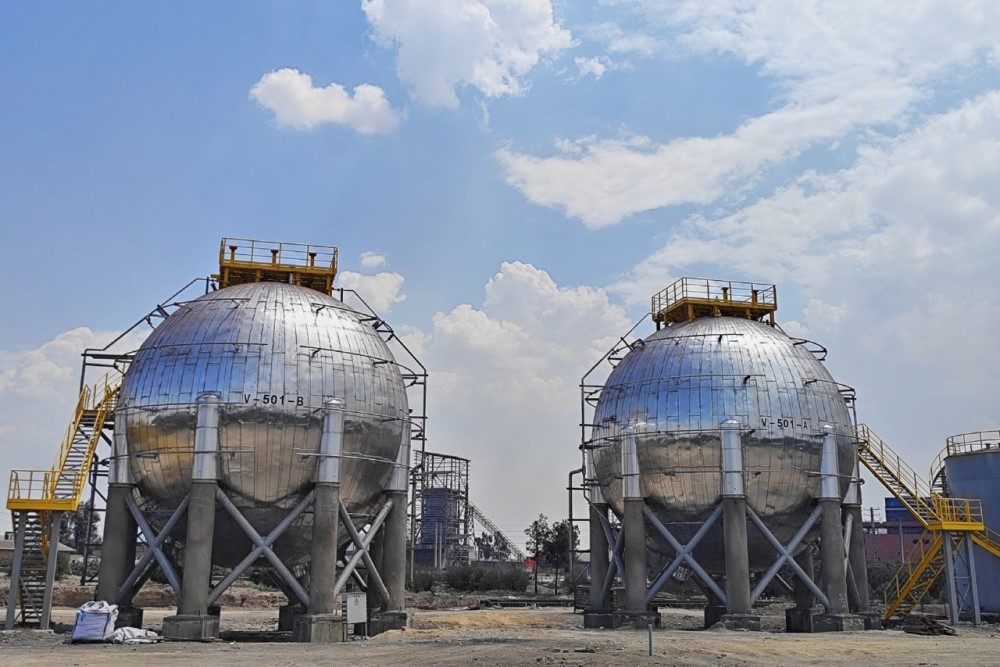
Spherical pressure vessels are recognized as one of the most complex engineering structures in the oil, gas, and petrochemical industries. Due to their unique design, these vessels have widespread applications in the industry. Their spherical shape allows them to withstand higher pressures compared to other types of tanks. This article introduces and discusses key considerations in the design, materials used, maintenance tips, and related standards for these vessels.
Materials Used in Spherical Pressure Vessels
The selection of appropriate materials is one of the most important factors in constructing spherical pressure vessels. The materials used in these vessels must have high resistance to pressure, corrosion, and temperature changes. The best materials for these types of tanks include carbon steel, stainless steel, and some special alloys. For example, stainless steel, which is highly resistant to corrosion and has excellent weldability, is commonly used for storing corrosive liquids.
Design Codes and Standards
The design and construction of pressure vessels, like other advanced engineering equipment, must adhere to international standards. These standards have evolved over several years and have optimized the production of such vessels. Organizations such as ASME (American Society of Mechanical Engineers) and API (American Petroleum Institute) have defined specific standards for the design, materials, and testing required for these tanks. Adhering to these standards ensures the safety, functionality, quality, and resistance of the vessels to both internal and external pressures.
Stress Analysis and Structural Stability
Due to the high pressure inside these vessels, stress analysis and structural stability are critical in the design process. Techniques such as Finite Element Analysis (FEA) allow engineers and designers to simulate the stress distribution on the tank walls and identify any potential weak points. This method also helps optimize wall thickness, which reduces costs while maximizing safety.
Safety Features and Overpressure Protection
Safety equipment in under pressure vessels plays a vital role in maintaining their stability. Safety valves and burst discs are among these devices, which prevent damage to the tank in case of excessive pressure. These devices are designed to quickly relieve excess pressure and stabilize the internal pressure of the vessel, preventing explosions and failures.
Inspection and Maintenance
Regular periodic inspections and non-destructive testing (NDT) are effective ways to maintain the integrity of pressure vessels. Methods such as ultrasonic testing, radiographic testing, and electromagnetic testing are used to detect any cracks, fractures, defects, or corrosion in the tank walls. These tests should be performed regularly to ensure the tank’s proper functioning and maintain safety.
Preparation for Construction and Easy Maintenance
The design quality and standards of spherical tanks under pressure, should facilitate ease of construction and maintenance. Using modern welding techniques and ensuring easy access to various parts of the tank for inspection and repairs are key design considerations. Petrosazeh International, as a manufacturer of pressure vessels in Iran, produces high-quality tanks using modern welding methods and international standards, ensuring ease of maintenance.
Environmental and Operational Conditions
Environmental factors such as temperature, humidity, and corrosion can significantly affect the lifespan of pressure vessels. Spherical pressure vessels must be highly resistant to harsh environmental and geographical conditions. Moreover, other factors like cyclic loading, pressure variations over time, and the use of safety equipment must also be considered in the design to prevent failure and damage.
Applications of Spherical Pressure Vessels
The spherical shape of pressure vessels helps evenly distribute pressure across the entire surface, making them suitable for many industrial applications. Generally, these vessels are used in industries that require the storage or transportation of pressurized liquids or gases. Some key applications include:

- Oil and Gas Industry: One of the most common uses of spherical pressure vessels is for storing compressed natural gas (CNG) and liquefied gases such as propane and butane. These vessels are essential for storing gases at high pressure and temperature to prevent leaks or explosions.
- Petrochemical Industry: In petrochemical processes, various chemicals and gases like ammonia, ethylene, and hydrogen are stored in spherical pressure vessels. Due to their high reliability and safety, these tanks are used to store hazardous materials that can react with air or other substances.
- Food and Beverage Industry: Spherical tanks are used in the food industry for storing gases like carbon dioxide, which is used in the production of carbonated beverages and food packaging. Their sealed structure and high safety features make them ideal for storing these gases.
- Power Plants and Electricity Production: Spherical pressure vessels are used to store hydrogen, which is involved in cooling systems for power plants and some electricity production processes. Hydrogen storage requires vessels with high safety and pressure resistance.
- Transportation Applications: These vessels are also used for transporting liquefied gases like LPG (liquefied petroleum gas) and LNG (liquefied natural gas). Their spherical design ensures high safety against vibrations and temperature fluctuations during transport.
- Chemical Production and Processing Industries: In chemical production, gases like ammonia, chlorine, and other industrial gases are stored in spherical pressure vessels to prevent hazards
associated with storing dangerous chemicals. Due to their high pressure resistance and safety features, these vessels are widely used in such industries.
Conclusion
Overall, spherical tanks under pressure play a crucial role in various industries, particularly in oil, gas, petrochemicals, and food industries. Due to their unique structure and ability to withstand high pressures, these vessels are an ideal choice for storing hazardous materials and pressurized gases. Proper design, construction, and maintenance based on reputable standards not only increase the lifespan and safety of these vessels but also improve their efficiency and productivity.