Plate heat exchangers (PHEs) are essential equipment in various industries, particularly in the oil and gas sector. These exchangers consist of multiple thin plates that are slightly spaced apart, facilitating heat transfer between two fluids. This design provides a large surface area for heat exchange, making plate heat exchangers significantly more efficient compared to traditional heat exchangers such as shell-and-tube types.

Plate heat exchangers are composed of a series of corrugated plates held in a frame. The plates are typically made of stainless steel to withstand high pressure and temperature and to be resistant to corrosion. The corrugated design increases fluid turbulence, thus enhancing heat transfer efficiency. Gaskets are placed around the edges of the plates to seal the fluid flows and prevent leaks.
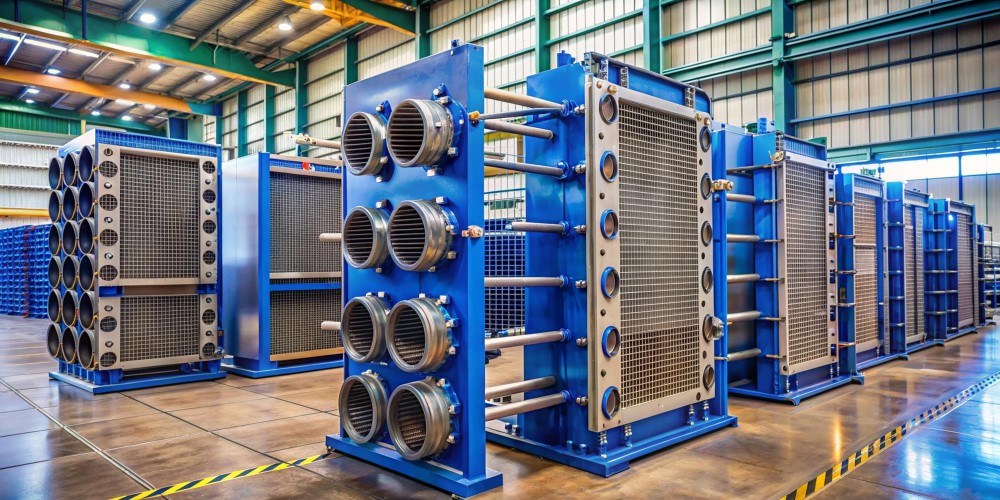
Plate heat exchangers have extensive applications in the oil and gas industry, including:
Plate heat exchangers come in various types due to their specific design and high flexibility, each suited for particular applications. Here are some of the key types and their features:
These exchangers consist of a series of plates separated by gaskets. The gaskets seal the fluids and prevent leakage. GPHEs are widely used in various industries including oil and gas, food, and pharmaceuticals due to their high flexibility in maintenance and capacity adjustment.
In these exchangers, the plates are joined together by brazing, eliminating the need for gaskets. They are used in HVAC, refrigeration, and industrial applications due to their high resistance to pressure and temperature. Advantages include compact size, high resistance, and low maintenance costs.
These exchangers combine welded and gasketed plates. One side of the plates is welded, and the other side uses gaskets. They are suitable for applications where one fluid must be at high pressure, while the other does not. Benefits include combining the advantages of both welded and gasketed types, making them suitable for corrosive and pressurized fluids.
In these, all the plates are welded together without gaskets. They are ideal for very harsh conditions such as high pressures, temperatures, and corrosive fluids. Advantages include very high resistance and suitability for severe working conditions.
These exchangers are designed to allow the addition or removal of plates as needed. They are used in industries where heat transfer capacity needs to be adjusted over time. Features include flexibility in capacity and adaptability to process changes.
These exchangers consist of spiral-shaped plates, creating a spiral path for the fluids. They are suitable for high-viscosity fluids and applications requiring stable flow and low turbulence. Advantages include low pressure drop, good performance with viscous flows, and are used in chemical, petrochemical, food, and pharmaceutical industries.
Optimizing these heat exchanger performance involves increasing heat transfer rates and reducing pressure drops. Given the presence of corrugated plates, resistance to flow and pressure drop can be significant. Therefore, design should address both factors.

Conclusion
Plate heat exchangers are an excellent choice for many industrial applications, particularly in the oil and gas sector, due to their high efficiency and compact design. However, careful selection and design are necessary to meet the specific needs of each application.
This summary outlines the applications and benefits of plate heat exchangers in the oil and gas industry. For further information, consult reputable sources such as engineering books and scientific articles.
Petro structure Company is a manufacturer of heat exchangers such as shell and tube exchanger, plate exchanger and air exchanger. This complex has the possibility of building heat exchangers by using the expert forces and required equipment. Contact our experts for expert advice.
References